FortunePlay Account and Registration: Sign-Up, Verification and Account Rules
 Available in AU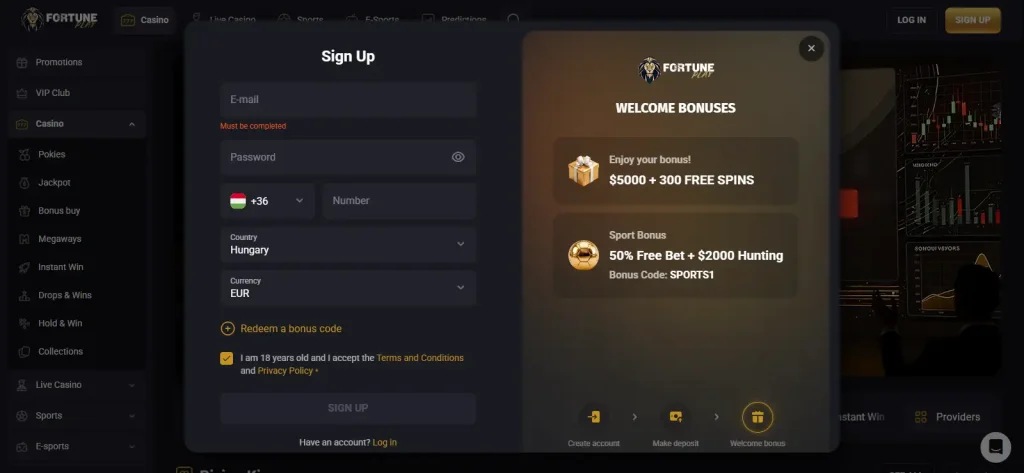
FortunePlay currently has an English-AU site and an account sign-up flow. That interface establishes localisation, while Australian regulatory treatment and account eligibility depend on their own rules and records. The current Terms require accurate personal information, limit each individual to one personal player account and allow identity checks as part of KYC. They also state that real-money account holders must meet the applicable minimum age and provide identity and contact details that can be verified.
Registration begins an account lifecycle that extends well beyond the initial form. Information entered at sign-up can later be compared with ID, address and payment records. Mismatches among names, dates of birth, addresses or payment details can complicate verification and withdrawals.
Table of Contents
- What the current registration rules show
- One personal account is the core rule
- Why accurate registration details matter later
- Age and identity obligations
- What KYC can involve
- Registration and transaction approval follow different stages
- What the AU-facing sign-up flow shows
- Account security starts before KYC
- What to do if your details change
- Account habits that prevent avoidable problems
- How the account lifecycle fits together
- A sensible registration checklist
- Account setup priorities
What the current registration rules show
FortunePlay’s current Terms define the account rules, while the live English-AU interface shows how registration is presented. A country selector or AU-localised screen concerns the interface; Australian legal and regulatory status depends on separate regulator records.
For account access, the two issues need to stay apart. A registration form can show what information the operator asks for and how the account system works. That interface information belongs alongside the distinct Australian regulatory context based on ACMA and licensing records. Account setup and maintenance should be considered independently of any legal inference drawn from the interface.
One personal account is the core rule
FortunePlay’s current Terms say each individual may register and maintain only one personal player account. They also say accounts sharing the same residential address, household, IP address or device can be treated as duplicates. The operator reserves remedies for duplicate accounts, including account closure and consequences for pending withdrawals or winnings.
This is more important than it first appears because duplicate-account checks can be triggered by ordinary household situations. Two adults using the same home internet connection, one person opening an extra account after forgetting login details, or multiple accounts created on one shared device can all create facts that resemble duplication from the operator’s perspective.
A safer account-management approach is simple: maintain one personal account, use official recovery channels if access is lost, and keep credentials private. If more than one eligible adult in a household uses the service, each person should use their own identity and payment details and be prepared for additional checks if the operator needs to distinguish the accounts.
Why accurate registration details matter later
FortunePlay’s Terms require identity and contact information that can be checked. FortunePlay’s KYC terms list a full legal name, complete residential address, valid email address, date of birth and identity documents among the information that can be required. The operator can also request additional documentation when needed for verification.
Spelling, address format and date of birth directly affect later verification. They can be matched against KYC documents and payment details later. If an account uses a nickname while the payment method uses a legal name, or an old residential address remains on the account after other documents have changed, the mismatch can require explanation or correction before a transaction is approved.
It is better to fix an account detail through the site’s official support process than to create a second account with different information. The one-account rule makes duplicate registration a poor workaround for a typo, changed email address or lost password.
Age and identity obligations
The current Terms say real-money account holders must be natural persons and require a date of birth plus valid ID proving that the user is at least 18 or meets the legal age in the relevant jurisdiction. They also state that underage use can lead to account closure and the reversal or voiding of transactions under the operator’s rules.
That operator rule applies to FortunePlay account eligibility; Australian gambling law is a separate regulatory framework. It simply describes what FortunePlay currently requires for its account. Age requirements can also intersect with verification because the date of birth entered during registration must be supportable by the identity document later supplied.
Create an account only when you meet the operator’s age rule, and use your own identity details. The Terms also prohibit account sharing, and later verification becomes harder when the person controlling the account differs from the person named in the documents or payment method.
What KYC can involve
FortunePlay’s current Terms say the operator can conduct identity and contact checks and can request additional documentation or a phone call. The published document categories include government-issued photo identification and proof of current address, with further information possible where needed. Payment-method proof can also enter anti-fraud or verification checks.
Document requirements and processing timing can change, so current AML/KYC terms should be used for document and timing details. At registration, KYC builds on the information entered earlier. It tests whether the account identity can be supported by documents and transaction records.
Verification can arise before or during transaction checks, including before any large withdrawal issue appears. They allow verification checks as part of account eligibility and compliance, so account details should be entered with later document checks in mind, whether the first request arrives immediately or later.
Registration and transaction approval follow different stages
Opening an account starts the account relationship; deposits and withdrawals remain subject to their own payment, verification and account conditions. Payment methods have their own conditions, names can be checked against account details, and the operator can request verification before or during transaction review. The deposit methods section lists the current AU payment options, while withdrawal conditions cover cashout rules and timing.
Accurate account setup matters from the first deposit because later withdrawal checks reuse the same personal details. Use an email address you control, enter your own legal identity, keep the residential address current, and avoid payment instruments that belong to someone else unless the operator’s rules explicitly permit them. Those habits reduce avoidable mismatches and keep the account record consistent for later checks.
What the AU-facing sign-up flow shows
FortunePlay currently serves an English-AU version of its website. That establishes localisation for an Australian audience. Australian regulatory treatment comes from regulator records; interface language, currency and registration controls only describe the product surface.
For the same reason, a country field, currency display or accessible registration button shows interface availability; regulatory status requires its own assessment. Interface controls answer interface questions. Licensing and enforcement questions require regulator sources. The licence and ACMA context explains why FortunePlay’s foreign licence and Australian enforcement record can coexist.
Loading the site from a particular network shows only technical access at that moment. Ongoing account access, ISP blocking and Australian regulatory status each depend on different conditions.
Account security starts before KYC
The Terms prohibit sharing account credentials or allowing another person, including a minor, to access the account. This is partly a security issue and partly an identity issue. If someone else uses the account, later transaction patterns, device information or payment details can diverge from the named account holder.
Use a unique password for FortunePlay and keep access to the registered email account secure, because email is commonly involved in password resets and account notices. Check the live account security settings for any additional controls available at the time; FortunePlay’s published terms confirm the documented account-security rules.
Send identity documents only through the account interface or another official channel identified by FortunePlay. When KYC is requested, follow the channel specified by FortunePlay so sensitive identity material stays within the operator’s documented process.
What to do if your details change
Addresses, phone numbers and email access can change after an account is created. Because FortunePlay’s verification process relies on identity and contact information, stale account data can cause friction when a later document shows a different address or an obsolete email prevents security messages from arriving.
Use the operator’s support process to update information on the existing account. Keep records of any requested change and, if you are in the middle of a withdrawal or verification review, tell support about the mismatch before uploading documents that appear inconsistent with the profile. The operator may still ask for further proof, but explaining a legitimate change is better than creating conflicting account records.
If your legal name has changed, expect the operator to require documents linking the old and new names. FortunePlay’s current Terms leave the exact supporting document to the individual request, so follow the instructions issued for the account.
Account habits that prevent avoidable problems
- Creating a second account after losing access. Use account recovery instead because the Terms limit each person to one personal account.
- Entering approximate identity data. Names, birth dates and addresses can be compared with later documents.
- Sharing an account with another person. The Terms prohibit credential sharing and account access by others.
- Treating the absence of an immediate KYC request as a permanent verification exemption. The operator can conduct verification checks and request documents.
- Treating the AU interface as a licence. Localisation and Australian regulatory authorisation are distinct facts.
- Using somebody else’s payment details before confirming the applicable rules. Payment ownership can become relevant during anti-fraud and verification review.
How the account lifecycle fits together
FortunePlay registration starts a sequence of account stages that continues beyond sign-up. First comes account creation, where the user supplies identity and contact details. Next comes account use, including deposits, games and any bonuses. Verification can occur when the operator needs to confirm identity, address, eligibility or transaction information. Withdrawals can then depend on both payment rules and successful completion of required checks.
Each stage reuses information from the earlier stage. The name on the account can matter when a payment method is reviewed. The residential address can matter when proof of address is requested. The date of birth can matter when age is checked. That is why accurate registration is a practical withdrawal-preparation step even though withdrawal may happen much later.
Account setup, verification, payments and withdrawals form the practical account lifecycle. Start here for account rules, use the KYC requirements for document detail, and the payment information for deposit options. Australian authorisation is set out under the Australian status material and requires a separate regulatory assessment from registration mechanics.
A sensible registration checklist
- Read the current Terms before creating the account, especially the eligibility, account and KYC sections.
- Use your full legal name and real date of birth.
- Enter a current residential address that you can support if proof is requested.
- Use an email address you control and can keep secure.
- Create only one personal account and recover access instead of opening duplicates.
- Keep credentials private and transactions under the named account holder’s control.
- Expect that identity, address or payment documents can be requested later.
- Check Australian regulatory status through regulator records; sign-up visibility only describes technical access.
Account setup priorities
FortunePlay has a current English-AU website and a registration flow, while its Terms set out one-account, identity, age and verification obligations. The most important practical rule is consistency: create one account in your own name, provide accurate information and keep it current so later KYC and transaction checks have a coherent record to compare against.
Account creation, payment approval, KYC and Australian regulation follow different rules. Current document and timing details sit under verification, while ACMA and offshore-licensing context sit under Australian status.
Payments, games, bonuses and Australian context beyond account mechanics also appear in the FortunePlay Australia review.